
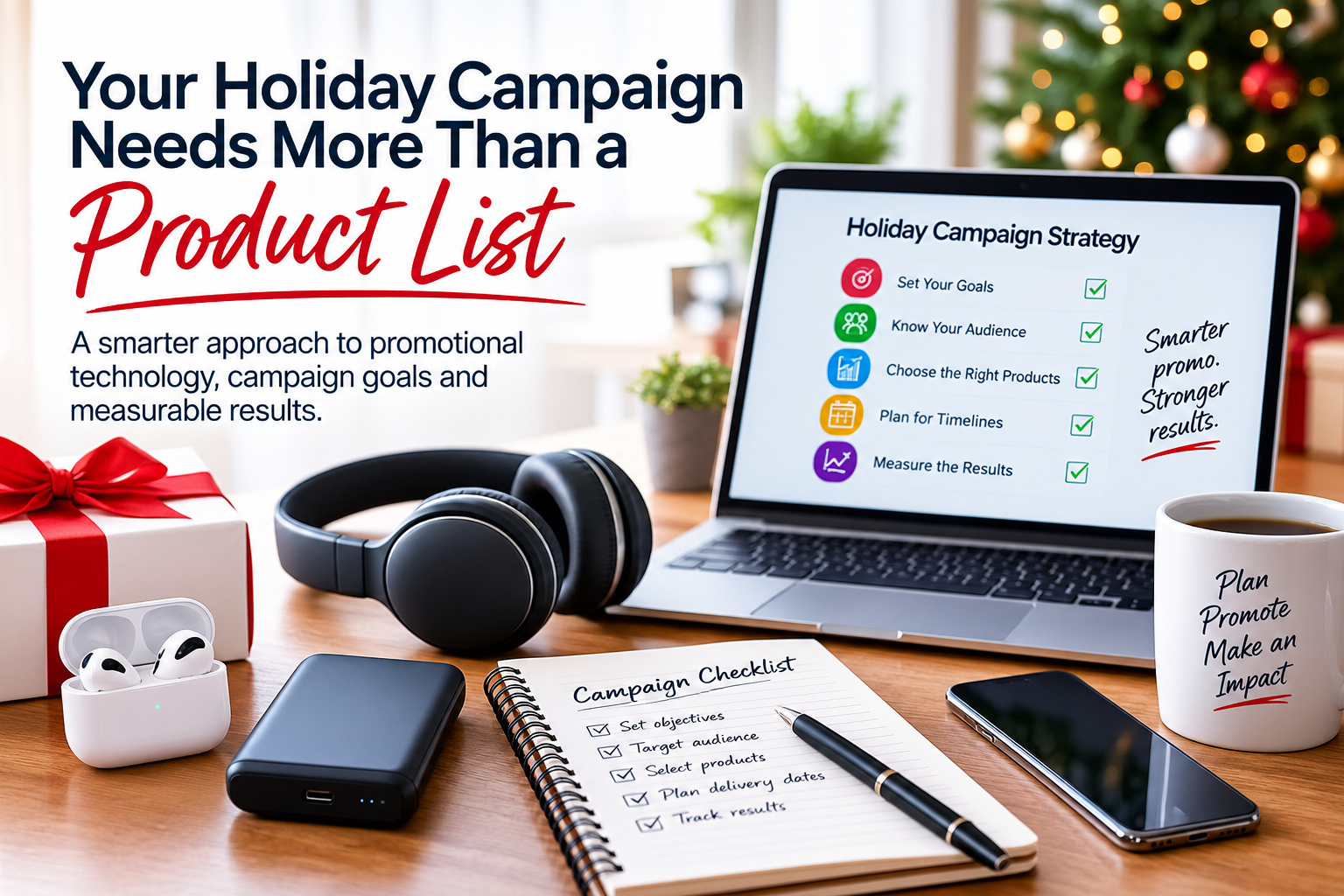
A smarter approach to promotional technology, campaign goals, and measurable results.*
As businesses prepare for the holiday season, promotional merchandise decisions often begin with a familiar question: What products should we order?
But the most effective campaigns begin somewhere else.
They begin with a business objective.
Are you trying to strengthen customer relationships before year-end? Recognize employees for their contributions? Generate leads at a holiday event? Encourage repeat business? Or make a stronger impression on prospects before the new year?
The answers should influence every decision that follows, from product selection and branding to distribution, timing, and measurement.
Because a holiday promotional campaign should do more than distribute products. It should support a business goal.
The Industry Is Asking for More Strategic Value
Promotional products remain an important part of the marketing mix, but expectations are evolving. Businesses increasingly want their promotional merchandise programs to demonstrate a clear purpose and contribute to broader marketing objectives.
Research published by the Promotional Products Association International (PPAI) in October 2026 highlights this opportunity. In its survey of end buyers and marketing professionals, 49% of end buyers said better strategic ideas would make a promotional products distributor or vendor more valuable to them. Meanwhile, 55% said they want to measure promotional merchandise return on investment more effectively.
These findings reveal an opportunity for businesses to think beyond the product itself.
Instead of simply asking what to buy, marketers can ask how the product will support their campaign, what response they want to encourage, and how they will evaluate success.
Start With the Outcome, Not the Item
Different holiday campaigns have different goals. A product that works well for employee recognition may not be the best choice for a lead-generation campaign or a VIP client appreciation program.
Consider three common scenarios.
Customer appreciation: The objective is to strengthen relationships and reinforce the value of doing business together. A thoughtfully selected technology gift can serve as a tangible expression of appreciation while keeping the brand connected to the relationship.
Employee recognition: The objective is to acknowledge contributions and help employees feel valued. The product, presentation, and timing should reflect the significance of the recognition rather than feeling like a routine distribution.
Lead generation and events: The objective is to attract attention, create meaningful interactions, and encourage a next step. Promotional technology can support this goal when the product aligns with the audience and the campaign includes a clear follow-up strategy.
The product matters, but the reason for giving it matters just as much.
Why Promotional Technology Can Support a Stronger Campaign
Technology offers a range of possibilities for businesses planning year-end initiatives.
Wireless earbuds and over-ear headphones can be incorporated into employee recognition or premium client programs. Power banks and charging accessories can support travel-related promotions, sales teams, and event kits. Wireless charging products can be considered for office-focused campaigns and executive programs.
The key is to choose technology that makes sense for the audience and the intended outcome.
A premium product may be appropriate for a small group of high-value clients, while a broader employee program may require a different balance of features, quantities, and budget. A trade show campaign may prioritize portability, while an executive recognition initiative may emphasize presentation and perceived value.
There is no single product that guarantees a successful campaign. The strategy behind the selection makes the difference.
Build Measurement Into the Plan
One of the most overlooked aspects of promotional merchandise is deciding how success will be evaluated before the campaign launches.
Without a defined objective, it can be difficult to determine whether the investment achieved what the business intended.
Start by identifying a primary goal and choosing a few relevant indicators.
For a customer-retention initiative, businesses might track repeat purchases, account engagement, or responses from recipients. For an employee recognition program, they might measure participation, feedback, or employee satisfaction. For a lead-generation campaign, they could track qualified leads, meeting requests, follow-up engagement, and eventual conversions.
Not every outcome can be attributed to a promotional product alone. However, connecting merchandise to a broader campaign makes it easier to understand its role and improve future programs.
The goal is not to measure everything. It is to identify the outcomes that matter and establish a reasonable way to assess them.
Timing Is Part of the Strategy
Holiday campaigns involve more than choosing the right product. Inventory, branding approvals, shipping schedules, and distribution plans all influence execution.
Starting with the objective early gives teams time to compare options, confirm product availability, coordinate branding, and align the delivery schedule with the campaign itself.
For businesses still planning holiday initiatives, the priority should be to identify the audience, define the desired outcome, establish the budget, and confirm the timeline before narrowing the product selection.
That process helps prevent last-minute decisions from driving the entire campaign.
Make the Product Part of a Bigger Idea
The strongest promotional programs connect the product to a message.
A technology gift can reinforce a theme of innovation. An employee recognition package can communicate appreciation. A customer campaign can support a message of partnership and continued collaboration.
The product is one part of that experience, alongside the presentation, accompanying communication, and next step the recipient is invited to take.
When those elements work together, promotional merchandise becomes more than an isolated expense. It becomes one component of a coordinated marketing effort.
The Takeaway: Plan the Campaign Before You Choose the Product
As the holiday season approaches, businesses have an opportunity to make their promotional budgets work harder by approaching merchandise decisions more strategically.
Start with the objective. Understand the audience. Select products that support the purpose. Plan the timeline. And determine how you will evaluate the results.
Before building your holiday product list, answer one question: What do you want this campaign to accomplish?
That answer should guide everything that follows.
